Agmatine for women: are there any particularities
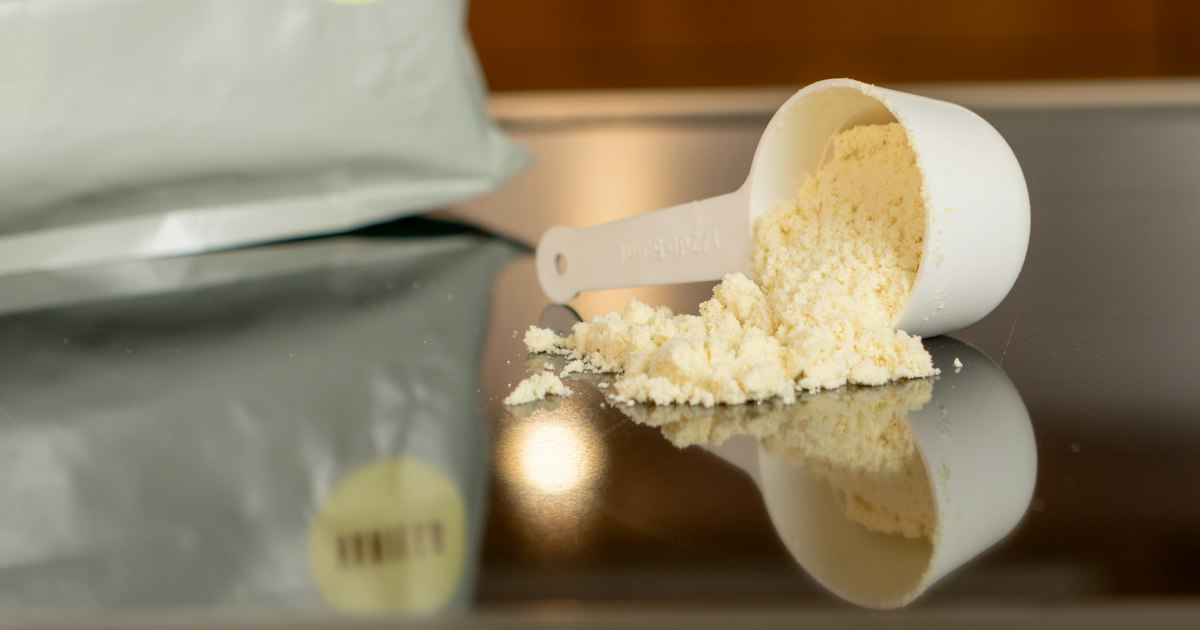
Agmatine is part of many pre-workout complexes that women are also happy to buy. It is also offered as a means for "mood" and "focus". Are there particularities in the action of agmatine related to sex? The editors have examined what is known from research, which factors really matter for women and in which situations it is better to refrain from agmatine.
Briefly about agmatine and its targets
Agmatine is a natural compound formed in the body from the amino acid arginine under the action of the enzyme arginine decarboxylase. It is present in the brain, where it acts as a neuromodulator (Reis, Regunathan, 2000), and also comes from food, in particular from fermented products.
Agmatine interacts with several systems: it binds to imidazoline and alpha-2 adrenergic receptors, blocks NMDA glutamate receptors, and affects the enzymes of nitric oxide synthesis (Molderings, Haenisch, 2012). That is why its effects are studied in such diverse areas as pain, mood and blood pressure.
None of these targets is related to sex hormones. Unlike "testosterone boosters", agmatine is not positioned as a hormonal agent, and there is no reason to expect androgenic or estrogenic effects from it.
So, for women the question is not about a "male or female" product, but about general safety and individual factors: blood pressure, taking medications, sensitivity to supplements affecting the nervous system.
Has agmatine been studied separately in women
The editors are not aware of any special studies of agmatine in women that would compare its effects between the sexes. The clinical base of agmatine is generally small, and the available works included mixed groups of participants.
The best-known clinical study is the work of Keynan et al. (2010) on radiculopathy associated with a disc herniation. Both men and women took part in it, and the authors rated the tolerability of agmatine sulfate as acceptable. However, an analysis separately by sex, as far as the editors know, was not done.
In preclinical studies of agmatine in animals, males were often used, which is a general problem of biomedical science. Therefore transferring the results to the female body has even more limitations than usual.
The review by Piletz et al. (2013) emphasizes that for most of agmatine's potential uses there is a lack of large randomized studies. For female athletes this gap is especially noticeable.

Factors that may matter for women
Although there is no direct data on sex differences, several general factors deserve attention. The first is blood pressure. Agmatine acts on imidazoline receptors, which are involved in the regulation of blood pressure, so people prone to low blood pressure should monitor how they feel.
The second factor is body weight. Supplements usually have a fixed dosage per serving, and women on average have a lower body weight than men. Accordingly, the same dose per kilogram of mass turns out to be higher, and this is worth taking into account by starting with the minimum serving.
The third is taking medications that act on the nervous system. Women are prescribed antidepressants and anti-anxiety agents more often than men. Since agmatine interacts with neurotransmitter systems, combining it with such drugs requires agreement with a doctor.
| Factor | Why it matters | What to do |
|---|---|---|
| Tendency to low blood pressure | Action on imidazoline receptors | Start with the minimum serving, monitor how you feel |
| Lower body weight | Higher dose per kilogram | Do not exceed the manufacturer's serving |
| Antidepressants, sedatives | Possible interactions | Agree with a doctor |
| Pre-workout complexes | Combination with stimulants | Take into account the total caffeine content |
The fourth aspect is the composition of the product. Women often get agmatine not as a mono-supplement but in pre-workout complexes, where it is combined with caffeine and other stimulants. In that case side effects are more often related precisely to the stimulants.
Pregnancy, breastfeeding and taking medications
The safety of agmatine during pregnancy and breastfeeding has not been studied. Given that agmatine acts on neurotransmitter systems, the editors do not recommend taking it during this period.
This also applies to pre-workout complexes with agmatine: during pregnancy it is advisable to review all supplements together with a doctor and keep only those whose safety is confirmed.
It is also worth mentioning drugs that affect blood pressure. Since agmatine was identified as a substance that competes with clonidine for binding sites (Li et al., 1994), theoretically an enhancement of the action of some antihypertensive agents is possible.
Situations in which it is better to refrain from agmatine without consulting a doctor:
- pregnancy, planning a pregnancy and breastfeeding;
- taking antidepressants, anti-anxiety or sedative agents;
- treatment of arterial hypertension or a tendency to low blood pressure;
- kidney disease, since agmatine is excreted mainly by the kidneys.
Practical recommendations on choosing and taking it
For healthy women without contraindications, agmatine can be considered the same way as for men: as a supplement with an interesting mechanism but limited evidence of efficacy in sport. Realistic expectations are the main condition for a sensible choice.
In the clinical study on radiculopathy, doses of agmatine sulfate of several grams a day were used (Keynan et al., 2010). Sports products usually contain much less — a few hundred milligrams per serving. It is sensible to start with the minimum amount and not to exceed the manufacturer's recommendation.
When choosing a product, pay attention to the form — most often it is agmatine sulfate — to the transparency of the composition and the presence of independent testing. For competing female athletes, certification of the product is especially important.
If the main goal is strength and muscle, the supplements with a better evidence base for women are the same as for men: creatine, sufficient protein, caffeine for training. Agmatine can only be an addition, not a foundation.
Editorial conclusions
Agmatine is not a hormonal supplement, and there is no reason to expect sex-specific effects from it. At the same time there is practically no separate research in women.
Factors important for women are lower body weight, a tendency to low blood pressure, taking antidepressants or sedatives, and the combination of agmatine with stimulants in pre-workout complexes.
During pregnancy and breastfeeding agmatine should not be taken, and in the presence of chronic diseases or the use of medications the decision must be made together with a doctor.
We also recommend our materials "Who should not take agmatine", "Agmatine and sleep" and "Fadogia agrestis for women: are there any particularities".
References
- Li G, Regunathan S, Barrow CJ, et al. Agmatine: an endogenous clonidine-displacing substance in the brain. Science. 1994;263(5149):966–969.
- Reis DJ, Regunathan S. Is agmatine a novel neurotransmitter in brain? Trends Pharmacol Sci. 2000;21(5):187–193.
- Molderings GJ, Haenisch B. Agmatine (decarboxylated L-arginine): physiological role and therapeutic potential. Pharmacol Ther. 2012;133(3):351–365.
- Piletz JE, Aricioglu F, Cheng JT, et al. Agmatine: clinical applications after 100 years in translation. Drug Discov Today. 2013;18(17–18):880–893.
- Keynan O, Mirovsky Y, Dekel S, et al. Safety and efficacy of dietary agmatine sulfate in lumbar disc-associated radiculopathy. Pain Med. 2010;11(3):356–368.
- Gilad GM, Gilad VH. Long-term (5 years), high daily dosage of dietary agmatine — evidence of safety: a case report. J Med Food. 2014;17(11):1256–1259.
- Maughan RJ, Burke LM, Dvorak J, et al. IOC consensus statement: dietary supplements and the high-performance athlete. Br J Sports Med. 2018;52(7):439–455.
Andriy Melnyk
A strength-sports coach and author of programs for beginner and intermediate levels. Writes about training planning.